

18-Nov-2026 Admin
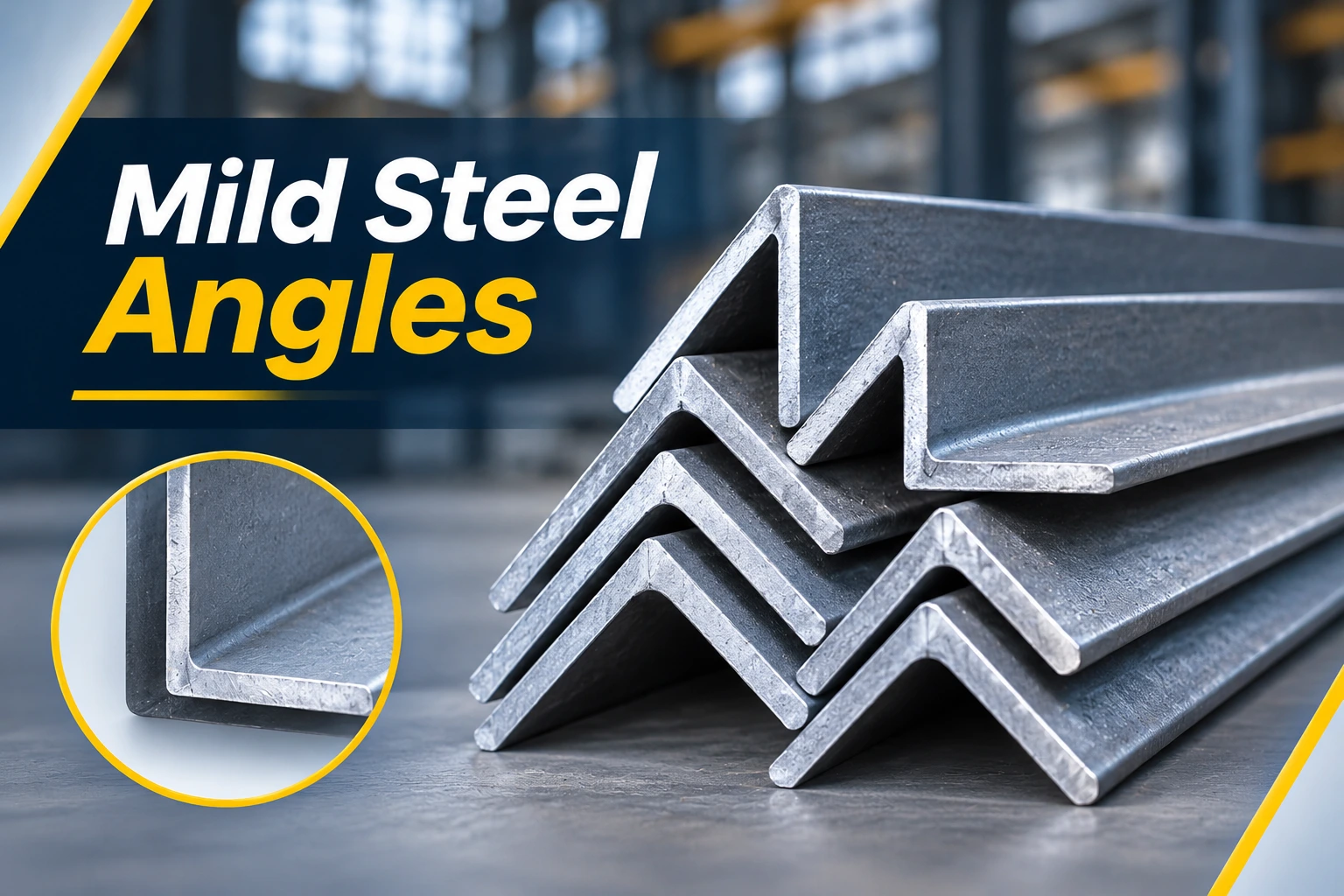
A mild steel angle is an L-shaped, hot-rolled structural section whose two legs meet at 90 degrees. Equal angles have legs of the same length, and unequal angles have legs of different lengths. In India, mild steel angles are supplied to IS 2062 (grade E250 for mild steel, E350 for higher strength), while global projects often specify ASTM A36, BS EN or AS standards. Angles are the main building block of lattice transmission towers, telecom towers, substations and steel frames. This guide explains how equal and unequal angles differ, how the grades and standards compare, how to read an angle size, where angles are used and what to check before you buy.
A mild steel angle (also called MS angle, angle iron, L-section or mild angle steel) is a structural steel section shaped like the letter L. It is made by hot rolling steel billets through shaped rolls, so both legs have flat faces and a uniform thickness along the length.
"Mild" refers to the low carbon content of the steel. IS 2062 grade E250, the usual mild steel grade, allows a maximum of 0.23% carbon. That keeps the steel ductile and easy to weld, cut, drill and galvanize. Angles are popular in towers and frames for three reasons:
The difference is leg length. An equal angle has two legs of the same length, and an unequal angle has one longer and one shorter leg. Both come in a range of thicknesses.
|
Feature |
Equal angle |
Unequal angle |
|
Legs |
Both legs the same length |
One leg longer than the other |
|
Designation (IS 808 style) |
ISA 75×75×6: 75 mm legs, 6 mm thick |
ISA 100×75×8: 100 mm and 75 mm legs, 8 mm thick |
|
Shape |
Symmetrical about the 45° axis |
Not symmetrical |
|
Common uses |
Tower legs and bracing, trusses, frames, general fabrication |
Members that need a larger connection or bearing face on one side, such as lintels, brackets and some truss members |
|
Typical choice |
Default for lattice towers and most structures |
Chosen when the design calls for a longer leg in one direction |
For lattice towers and most general structures, equal angles are the default because they are simple to detail and connect. Choose an unequal angle when the design needs a longer leg in one direction, for example to carry a load over a wider bearing face. The structural designer should make the final call based on load, buckling and connection details.
Different standards cover different things. Some define the steel, and others define the shape and size. A complete angle specification usually names both.
|
Standard |
Region |
What it covers |
|
IS 2062 |
India |
Hot-rolled medium and high tensile structural steel: grades E250, E350, E410 and their sub-grades |
|
IS 808 |
India |
Dimensions, mass and section properties of hot-rolled sections, including angles (ISA) |
|
ASTM A36 |
USA |
Carbon structural steel for shapes (including angles), plates and bars; minimum yield strength 250 MPa |
|
BS EN (EN 10025, EN 10056) |
UK and Europe |
EN 10025: structural steel grades such as S235, S275 and S355. EN 10056: dimensions and tolerances of equal and unequal angles |
|
AS (AS/NZS 3679.1) |
Australia and New Zealand |
Hot-rolled structural steel bars and sections |
Skipper's hot rolled structures range lists equal and unequal angles in IS, ASTM, BS EN and AS standards, with dimensional tolerance as per IS 2062 and ASTM A36.
This matters for export projects. A tower supplied to an overseas utility is usually specified to that country's standard. A manufacturer that can roll, test and certify to several standards avoids re-engineering and re-testing at the last minute.
The grade tells you how strong the steel is. For mild steel angles in India, the three IS 2062 grades you will meet most often are E250, E350 and E410. The number after E is the minimum yield strength in MPa.
|
IS 2062 grade |
Min. yield (MPa) |
Min. tensile (MPa) |
Min. elongation |
Max. carbon |
|
E250 (mild steel) |
250 |
410 |
23% |
0.23% |
|
E350 (higher strength) |
350 |
490 |
22% |
0.20% |
|
E410 (micro-alloyed) |
410 |
540 |
20% |
0.20% |
ASTM A36 has a minimum yield strength of 250 MPa (36 ksi) and a tensile strength of 400–550 MPa for shapes under 8 inches thick.
Both have a minimum yield strength of about 250 MPa, so they are often treated as comparable mild steel grades. They are not identical. Tensile strength, chemistry limits and testing rules differ, so the grade named in the project specification should be followed exactly.
IS 2062 sub-grades describe impact testing, which shows how tough the steel stays in cold conditions. The minimum impact energy is 27 J.
Lattice towers commonly combine mild steel (E250) and higher-strength (E350) angles. Heavily loaded members use the stronger grade to save weight, and lightly loaded members use the economical grade. The tower design decides which members get which grade.
An angle is written as ISA, then leg length × leg length × thickness, all in millimetres. ISA 75×75×6 is an equal angle with 75 mm legs and 6 mm thickness. IS 808 lists the standard dimensions, mass per metre and section properties (area, moment of inertia, radius of gyration) for each size, which designers use to check members.
Skipper's product listing states that dimensional tolerance follows IS 2062 and ASTM A36. When you inspect or accept angles, check:
Always ask for a mill test certificate that links chemical and mechanical test results to the heat number of the steel you receive.
|
Application |
How angles are used |
|
Lattice transmission towers |
Legs, cross-braces and cross-arms, bolted into a light, strong lattice |
|
Telecom towers |
Legs and bracing members of self-supporting and guyed towers |
|
Substation structures |
Support frames, gantry members and equipment stands |
|
Buildings and industrial structures |
Trusses, roof frames, platforms, racks, lintels and machine frames |
|
Fabricated components |
Brackets, cross-arms, base frames and supports |
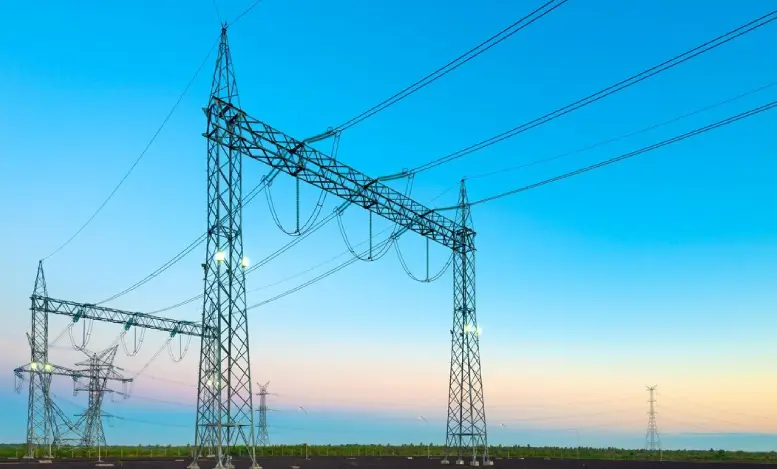
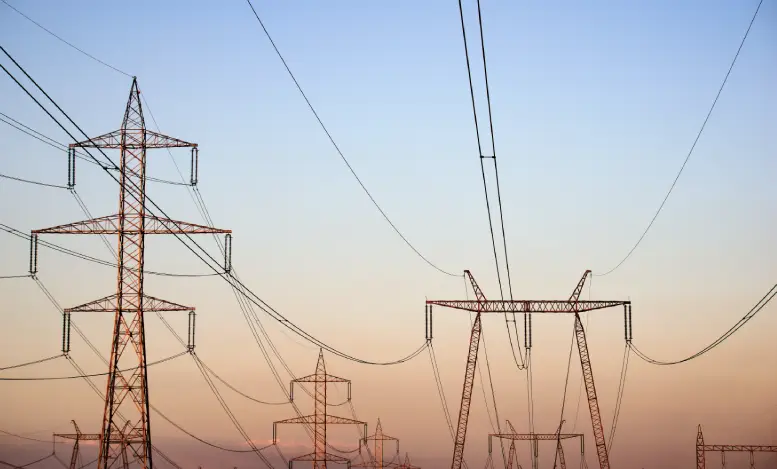
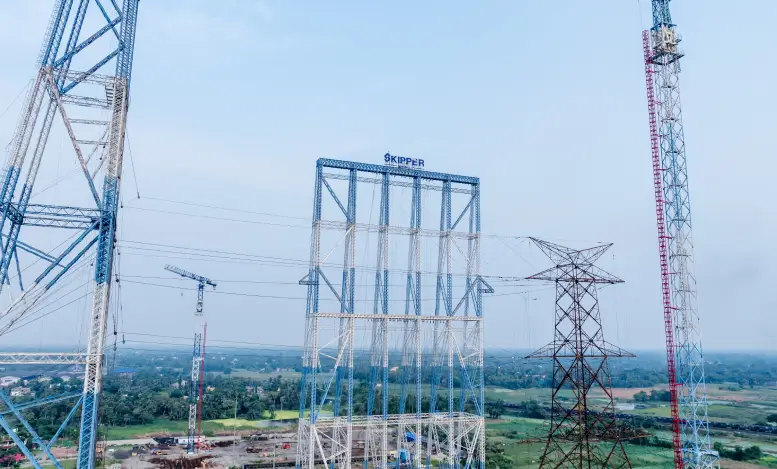
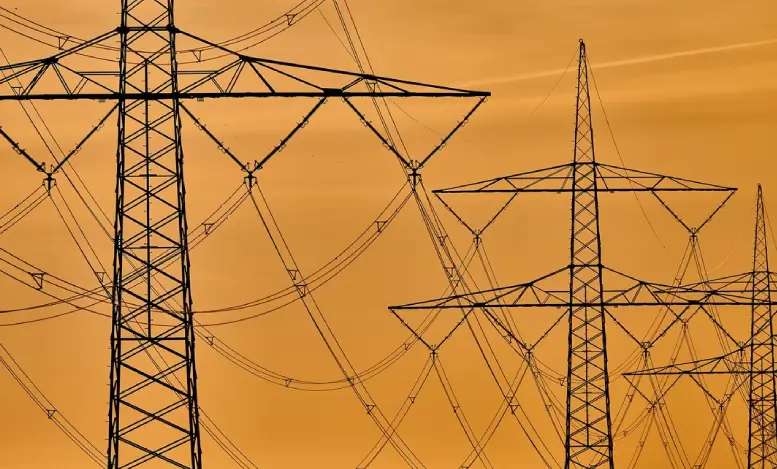
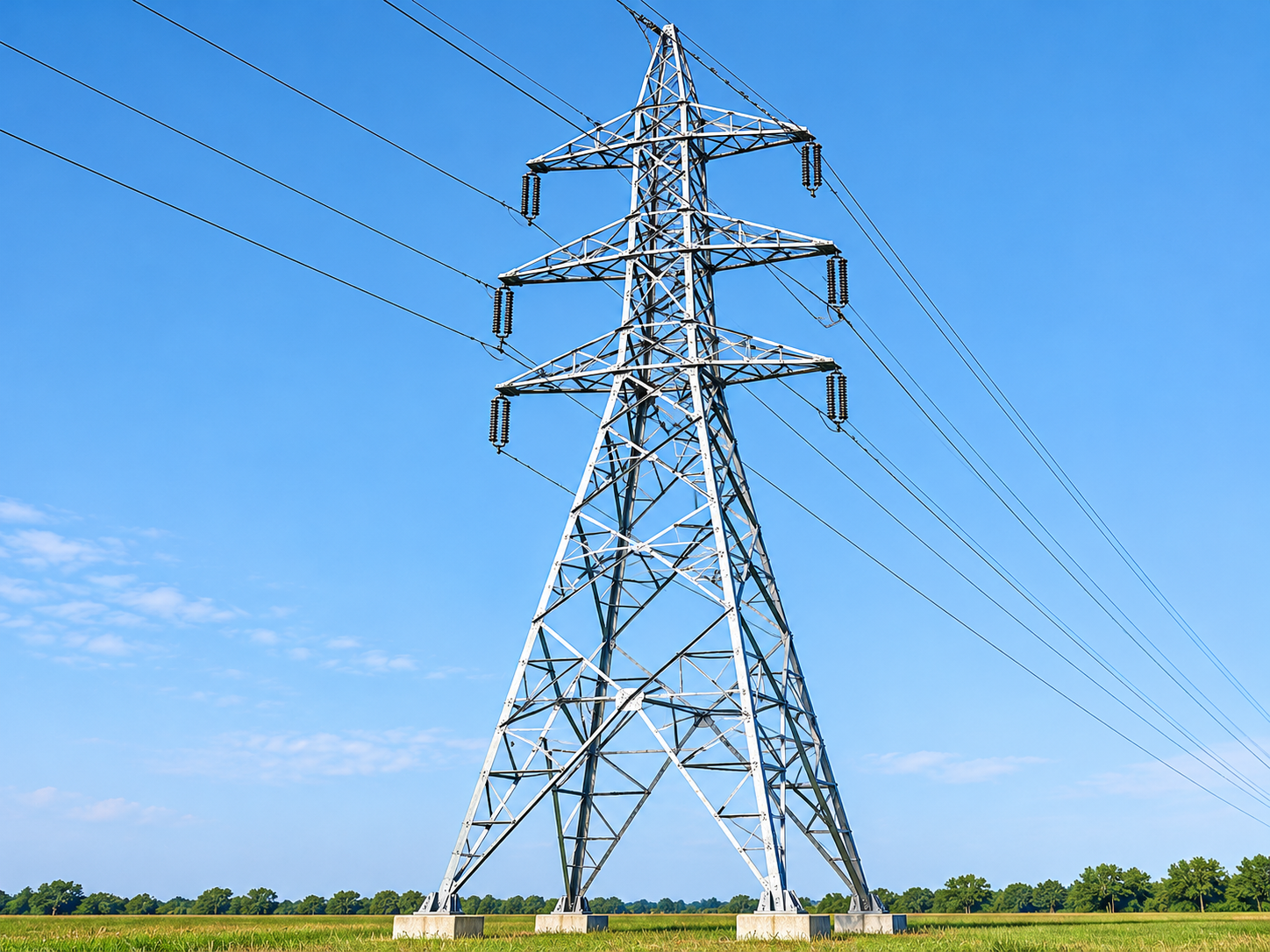
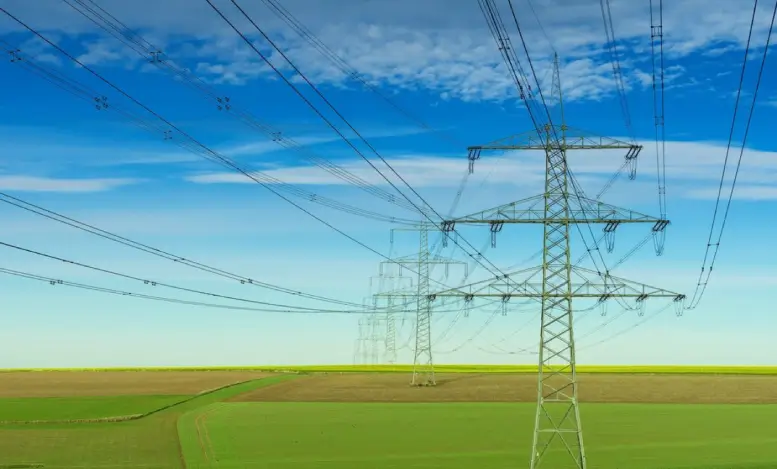
Towers show why angles are so widely used. A lattice tower is mostly made of members that carry tension or compression along their length. Angles do this efficiently, bolt together on site and can be galvanized in bulk. Skipper manufactures lattice, guyed and V-guyed transmission towers, and angles are the core material for all of them.
Hot-dip galvanizing dips fabricated steel in molten zinc. The zinc protects the steel in two ways: it forms a barrier against moisture and air, and it corrodes in preference to the steel if the coating is scratched. For towers and outdoor structures that stand for decades, this is the main defence against rust.
Coating thickness depends on the thickness of the steel and the specification, and the service life depends on the environment: coastal, industrial or rural. Galvanizing is normally done after cutting, drilling and punching, so that every cut edge is also coated. Skipper reports seven in-house galvanizing plants with a capacity above 300,000 MT per year, so angles can be rolled, fabricated and galvanized under one roof. You can read more in our blog on what hot dip galvanizing is.
Skipper Limited has more than 45 years of experience in engineering products and an engineering production capacity of 375K MTPA. Angles are rolled in-house and flow into fabrication and galvanizing in the same chain, which gives better control over quality and delivery time. The company serves customers in over 65 countries, and its quality system holds ISO 9001:2015, ISO 14001 and ISO 45001:2018 certifications. See Skipper's Hot Rolled Structures page for the product range, or contact the team with your section, grade and quantity for a quote.
Mild steel angles are the workhorse of towers and structures. Equal angles suit most designs, and unequal angles solve specific connection and bearing needs. In India, IS 2062 E250 is the usual mild steel grade, E350 is the stronger option, and ASTM A36 is the common international equivalent. Specify the grade, size, tolerance, galvanizing and test certificates up front, and you will avoid most of the problems that show up later at site.
An equal angle has two legs of the same length, such as ISA 75×75×6. An unequal angle has one longer and one shorter leg, such as ISA 100×75×8. Equal angles are the default for towers and general frames, while unequal angles suit designs that need a longer leg in one direction.
Mild steel angles are used for lattice transmission towers, telecom towers, substation structures, trusses, roof frames, platforms, racks, brackets and general fabrication. Their flat legs make bolted connections simple, and they can be galvanized for long outdoor life.
Mild steel angle is normally supplied to IS 2062 grade E250, which has a minimum yield strength of 250 MPa and a maximum carbon content of 0.23%. Higher-strength angles are supplied in grade E350 (350 MPa minimum yield) or E410.
Both have a minimum yield strength of about 250 MPa. ASTM A36 has a tensile strength range of 400–550 MPa, while E250 has a minimum tensile strength of 410 MPa. They are close but not identical, so follow the grade named in the project specification.
ISA stands for Indian Standard Angle. ISA 75×75×6 is an equal angle with 75 mm legs and 6 mm thickness. An unequal angle such as ISA 100×75×8 has a 100 mm leg, a 75 mm leg and 8 mm thickness.
For outdoor use, yes. Hot-dip galvanizing coats the steel with zinc, which protects it from corrosion and gives it a long maintenance-free life. Tower angles are almost always hot-dip galvanized after fabrication.
Give the section (equal or unequal), leg size and thickness, grade and sub-grade (for example IS 2062 E250 BR), the standard, length, quantity, galvanizing requirement, any drilling or marking, and the test certificates you need.


One of the world's largest integrated Transmission Tower manufacturing companies

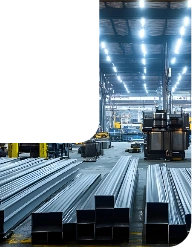
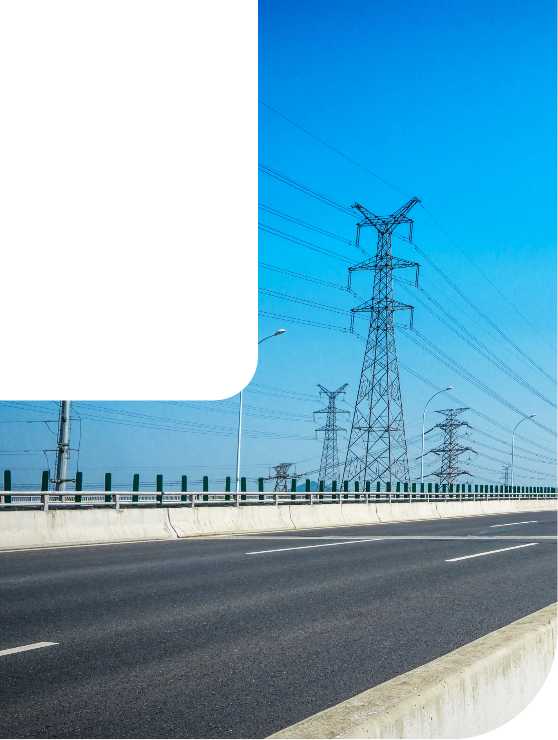
The company is also engaged in EPC Projects in Power Transmission & Distribution, Telecom infra and Railway Structures
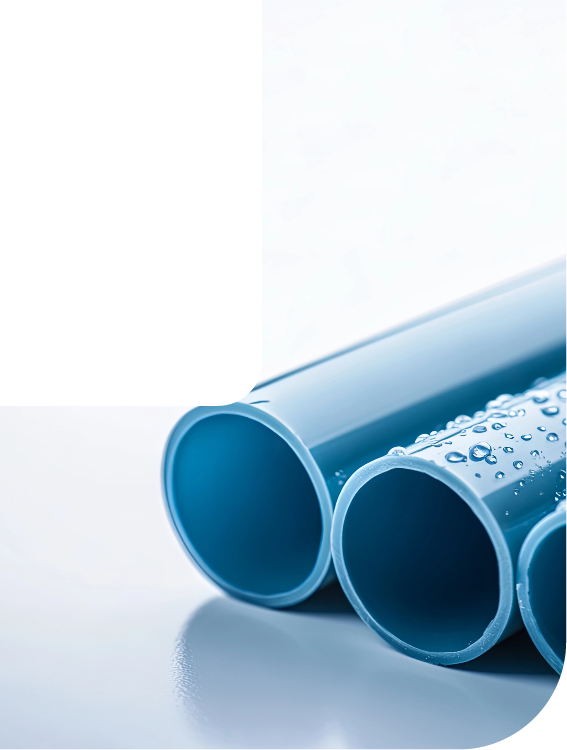
Skipper Limited is a national powerhouse in the Polymer Pipe business.

3A, Loudon Street, Kolkata- 700017, India