

12-Nov-2026 Admin
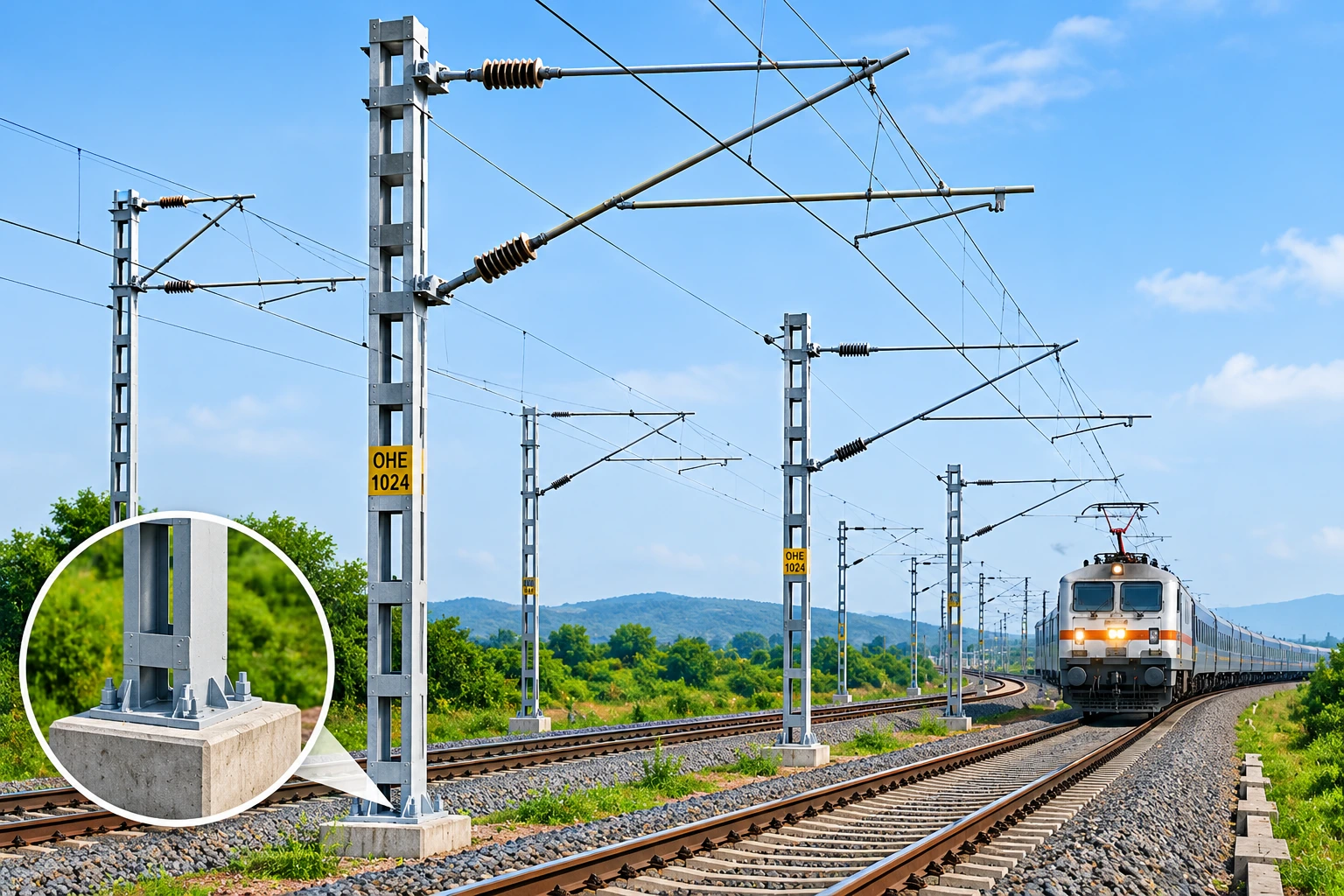
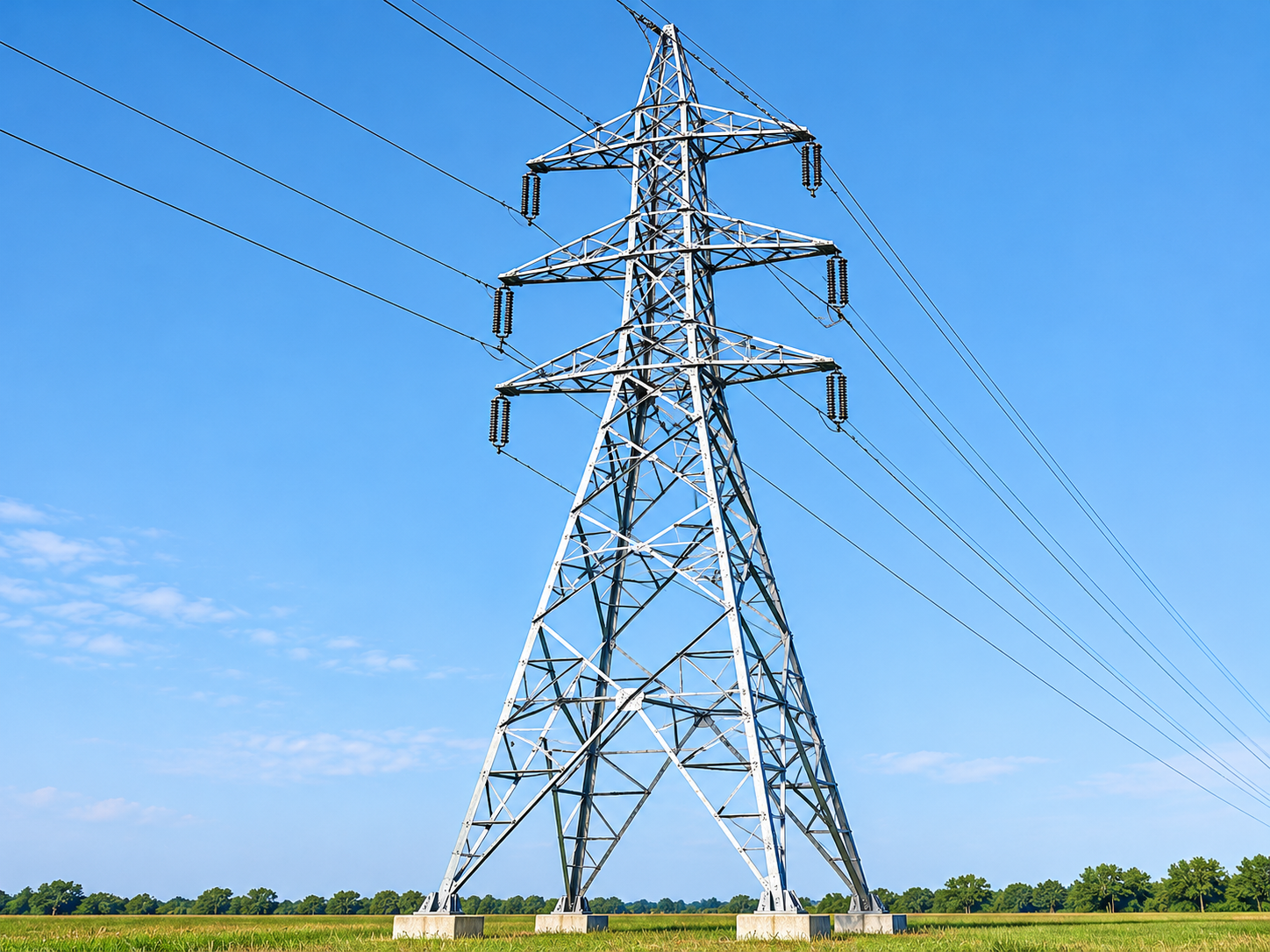
Railway electrification seems simple from a distance, but the system is based on several well-built structures functioning together. One is an OHE (Overhead Equipment) mast. It carries the overhead electrical equipment and holds it in the appropriate position for trains passing underneath. These constructions are exposed year after year to wind, rain, and other site conditions; therefore, their strength, size, and corrosion protection are not to be ignored.
They also have to meet the requirements defined for railway infrastructure. Skipper produces galvanized steel railway structures for such applications with capabilities matching RDSO and CORE criteria.
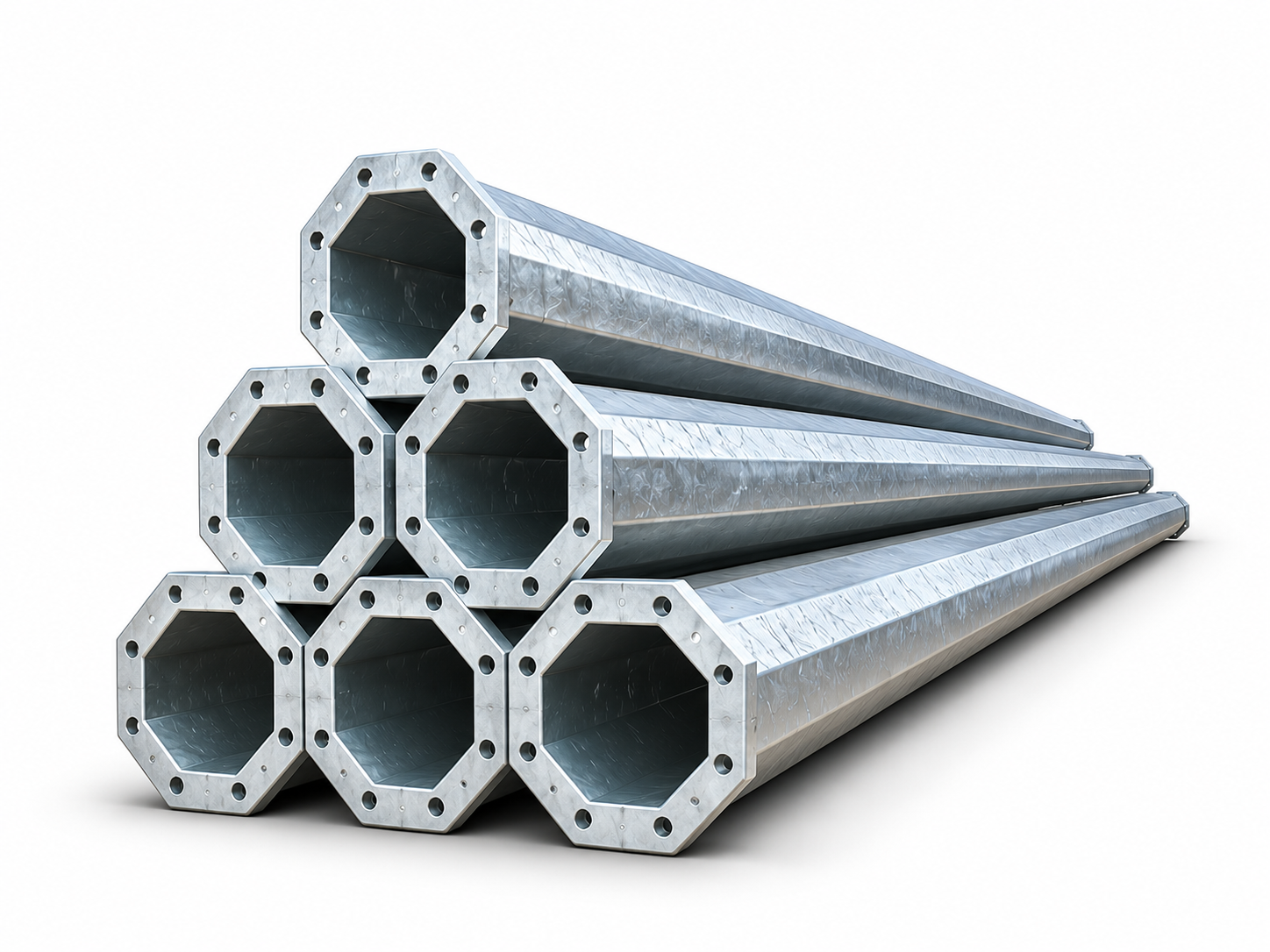
OHE Mast: A vertical structure that supports the overhead equipment required to deliver electricity to an electric train. The mast has brackets and support arms for the contact and catenary wires and insulators between the electrical parts and the steel framework.
Its position and strength must be constant so that the pantograph can keep good contact with the overhead wire as the train advances. The mast is simply one part of this installation; the whole OHE system comprises the wires, fittings, electrical equipment, and other supporting parts working together.
|
Requirement |
Why It Matters |
|
Structural strength |
Handles operational and environmental loads |
|
Dimensional accuracy |
Maintains correct OHE geometry |
|
Corrosion protection |
Improves service life |
|
Stable foundation connection |
Supports overall structural performance |
|
Quality-controlled fabrication |
Ensures consistency |
The type of OHE support structure will depend heavily on the arrangement of the track and the space available alongside it. A single-track section can use an individual mast for supporting the above equipment without making the arrangement complicated.
Where a number of tracks run together, portal structures or headspans can support the OHE over a number of lines from a coordinated framework. Engineers might utilize specifically constructed structures at railroad stations, yards, bridges and crossings which often have more restrictive or peculiar conditions.
In practice, the layout is chosen to suit the site, the electrical geometry required and the loads that the structure must safely take.
|
Type |
Typical Application |
Main Advantage |
|
Individual Mast |
Single-track arrangements |
Simple, independent support |
|
Portal |
Multiple-track sections |
Supports several tracks |
|
Headspan |
Multi-track areas |
Efficient cross-track support |
|
Special Structure |
Complex railway locations |
Adaptable to site requirements |
Although the OHE mast may appear to be a simple steel construction, the design and manufacture must meet the criteria stipulated for its specific railway application. In India, this means working to the required RDSO and Indian Railways specifications, drawings, and project requirements.
Proper control of material quality, structural loads, dimensions, welding and fabrication is required since even tiny differences might impair installation and service performance. Galvanization, inspection, testing, and traceability provide another level of assurance.
Note that requirements vary by construction and application and are not based on a common OHE mast standard. Skipper constructs railway structures as per RDSO and CORE specifications.
Railway constructions are outdoor structures for years, exposed to rain, humidity, dust, and industrial pollution. These conditions can gradually attack exposed steel and degrade the service performance of the steel if it is not properly protected.
Hot-dip galvanizing creates a protective zinc coating, improving the structure’s corrosion resistance in harsh situations. But protection is not enough. The framework also needs to be made correctly so that parts fit correctly, fit together without the need for needless adjustment and install as intended.
This is where Skipper’s in-house production, technical experience, quality processes, and testing facilities contribute value. Controlled fabrication, testing, and quality checks, appropriate to railway applications, are combined with its galvanized steel railroad constructions.
The selection of an OHE mast is an engineering decision and not only a product selection. The required structure depends on the track layout, electrical requirements, span, loading, and local wind conditions. Also, engineers have to examine the foundation, relevant railroad regulations, corrosion protection, and practical installation requirements.
Equally important are manufacturing and testing capabilities, because design intent must be carried through to the finished construction. With integrated engineering and manufacturing capabilities, Skipper can support rail projects needing engineered steel structures that are appropriate for the individual site and application requirements.
Railway electrification requires special structures that must work in difficult site conditions and to meet certain engineering standards. With strong production and engineering capabilities, Skipper extends this insight to the variety of galvanized steel railway structures. Its railroad constructions are made as per RDSO and CORE specifications and are checked and tested for quality at various stages of fabrication and installation to maintain consistency.
The experience also leverages Skipper’s broader expertise in steel-structure fabrication, enabling it to provide a practical view of railway projects based on engineered structures. This is where Skipper is well positioned to offer a dependable railway electrification system through engineered, quality railway structures.


One of the world's largest integrated Transmission Tower manufacturing companies

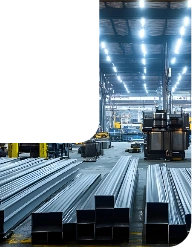
The company is also engaged in EPC Projects in Power Transmission & Distribution, Telecom infra and Railway Structures
Skipper Limited is a national powerhouse in the Polymer Pipe business.

3A, Loudon Street, Kolkata- 700017, India